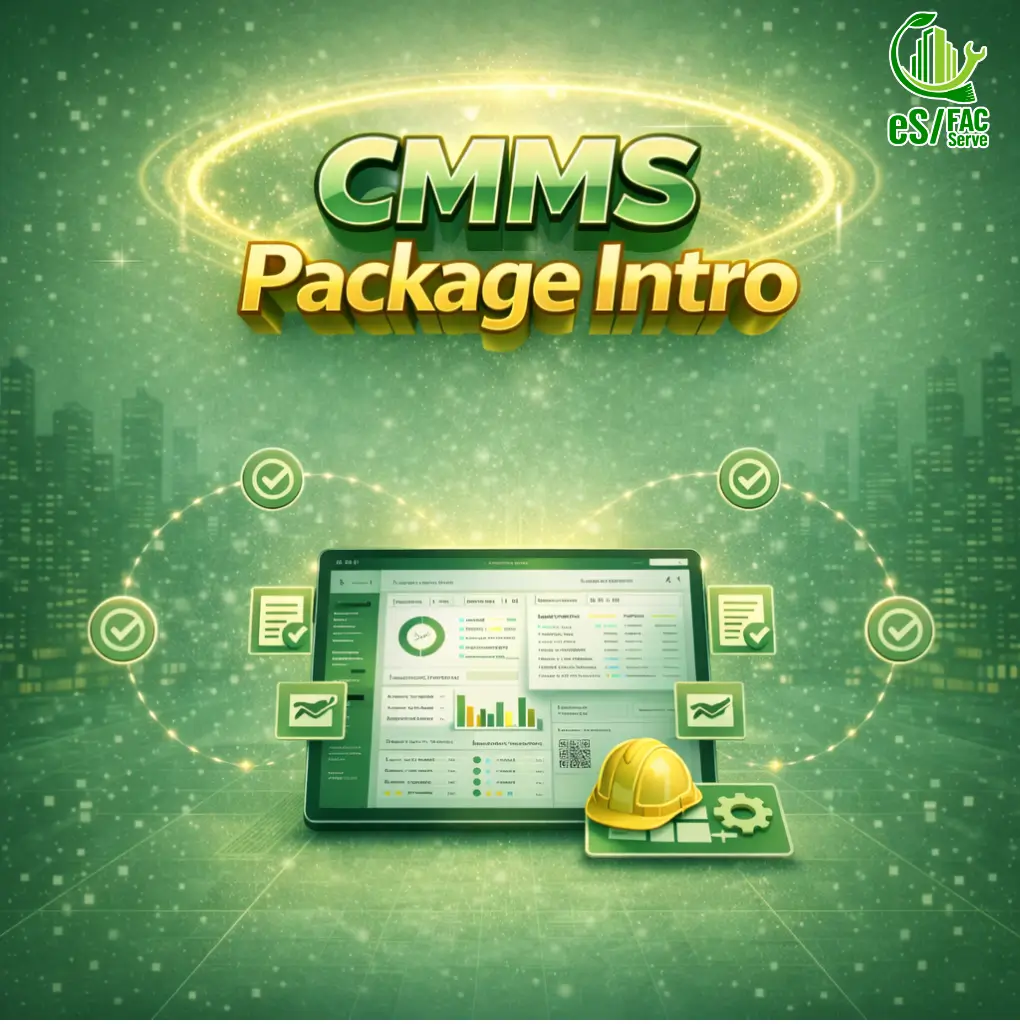
CMMS (Computerized Maintenance Management System): A system for maintenance and asset management.
In today's organizational context, maintenance and asset management have shifted from being merely supportive operational activities to becoming a strategic mechanism that directly impacts the long-term stability and competitiveness of an organization. This includes business continuity, personnel safety, maintaining operational standards, and effective cost control. Organizations with numerous buildings, factories, or assets are increasingly recognizing that "maintenance management" is not just a back-office function, but a factor clearly linked to business outcomes.
As the number of assets increases, the complexity of maintenance also expands. This includes not only the number of machines or equipment requiring maintenance, but also the variety of asset types, lifespan, specific operating conditions, and safety requirements that must be met. If an organization manages maintenance using a scattered approach or relies on unsystematic tracking, it risks encountering redundant problems such as unclear task assignments, incomplete information, delayed coordination, and outdated status monitoring. Ultimately, this can lead to process disruptions, impacted service quality, or unnecessary cost increases.
A major challenge facing many organizations is planning maintenance that aligns with actual operations. While patchy repairs may seem to solve problems immediately, they create significant hidden costs in the long run, such as emergency expenses, lost downtime, recurring failure risk, and budget uncertainty. Conversely, preventative planning that doesn't reflect actual operating conditions can lead to overwork, excessive resource consumption, or an inability to properly prioritize high-risk assets.
Another issue affecting the quality of maintenance management is "technical data," which is often voluminous and highly specialized. Information such as repair history, failure symptoms, parts used, operating time, associated costs, and causes of failures are all valuable for decision-making. If this data is not systematically collected or stored in a format that is difficult to search and verify, the analysis for improving maintenance work will lack accuracy. Management may only see total costs but fail to delve deeper into the points that increase costs or which assets pose the greatest operational risk.
Under these circumstances, a Maintenance Management System (CMMS) is not just an operational tool, but a "management structure" that standardizes every work process, from repair requests, approvals, assignments, status tracking , to summarization and data storage for future reference. When an organization has a system that allows for complete data linkage, decision-making is based on facts rather than guesswork, and it also helps reduce losses caused by inaccurate communication and redundant work.
The CMMS Package (Computerized Maintenance Management System) is designed to support organizations focused on maintenance and asset management. Its goal is to increase clarity, continuity, and reliability in overall maintenance management. This solution integrates all the essential functions for managing technicians and assets, enabling organizations to manage everything from a single central location, reducing the burden of fragmented tracking, and creating standardized, traceable data.
The core of the system is to enable organizations to systematically manage both corrective and planned preventive maintenance (PPM) tasks under a single database linked to the asset register. This clears coordination between teams and reduces gaps often caused by incomplete or outdated information. The solution also focuses on supporting organizations that require accuracy in asset management without relying on soft service functions, prioritizing the efficiency of skilled workers and structural cost control over soft service functions.
CMMS maintenance program from a management perspective.
Having a system that provides a clear overview of maintenance work elevates governance from "situational awareness" to "information-driven management." When maintenance trends and their connection to costs can be systematically identified, organizations can plan budgets more accurately, assess risks concretely, and pinpoint process improvements more effectively.
Ultimately, effective maintenance is reflected not only in the speed of completion of repairs, but also in the continuity of operations, the safety of personnel, and the ability to maintain the long-term value of assets. Therefore, a CMMS Package serves as a supporting mechanism that helps organizations manage maintenance reliably, systematically, and in alignment with all aspects of their business goals.
FAQ
What is the CMMS Package of eS/FAC Serve?
A maintenance module suite that integrates work orders, preventive maintenance plans, asset tracking, and performance reporting into a single system for buildings and plants.
Who is it suitable for?
Ideal for maintenance teams in buildings, offices, hospitals, factories, and contractors who need to manage repairs at multiple sites.
How do I get started?
Request a free demo on the trial request page or by emailing contact@esfacserve.com.